Big Crunch
A scenario where the universe collapses back to a singularity.

The Big Crunch is a hypothetical scenario for the ultimate fate of the universe, in which the expansion of the universe eventually reverses and the universe recollapses, ultimately causing the cosmic scale factor to reach absolute zero, an event potentially followed by a reformation of the universe starting with another Big Bang. The hypothesis dates back to 1922, with Russian physicist Alexander Friedmann creating a set of equations showing that the end of the universe depends on its density.
- hypothesis_origin
- 1922
- key_figure
- Alexander Friedmann
- field
- Cosmology
- known_for
- Proposing that the universe could recollapse if its density is high enough
- current_status
- Most evidence indicates the hypothesis is incorrect; expansion is accelerating
Lore & Background
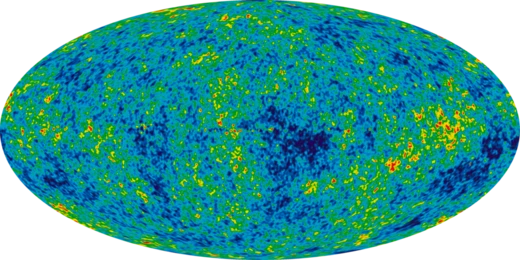
The Big Crunch scenario hypothesized that the density of matter throughout the universe is sufficiently high that gravitational attraction will overcome the expansion that began with the Big Bang. The FLRW cosmology can predict whether the expansion will eventually stop based on the average energy density, Hubble parameter, and cosmological constant. If the expansion stopped, then contraction will inevitably follow, accelerating as time passes and finishing the universe in a kind of gravitational collapse, turning the universe into a black hole. Experimental evidence in the late 1990s and early 2000s (namely the observation of distant supernovas as standard candles; and the well-resolved mapping of the cosmic microwave background) led to the conclusion that the expansion of the universe is not being slowed by gravity but is instead accelerating. The 2011 Nobel Prize in Physics was awarded to researchers who contributed to this discovery. The Big Crunch hypothesis also leads into another hypothesis known as the Big Bounce, in which after the big crunch destroys the universe, it begins a new expansionary epoch, causing another big bang. This could potentially repeat forever in a phenomenon known as a cyclic universe.
Reader's Guide
The Big Crunch scenario represents a key theoretical endpoint in cosmology, rooted in Alexander Friedmann's 1922 equations showing that the universe's fate depends on its density. For decades, it was a leading candidate for the universe's ultimate fate, until observational evidence in the late 1990s and early 2000s—including distant supernova measurements and cosmic microwave background mapping—revealed that the universe's expansion is accelerating, making a Big Chill more likely. This discovery earned the 2011 Nobel Prize in Physics. Despite being largely disfavored, the Big Crunch remains significant as a conceptual foundation for cyclic universe models, such as the Big Bounce, the Ekpyrotic model, and Roger Penrose's Conformal Cyclic Cosmology. These models propose that a Big Crunch could lead to a subsequent Big Bang, potentially creating an infinite cycle of universes. The hypothesis also connects to historical debates, including Bentley's paradox and Einstein's cosmological constant, which Einstein later abandoned after Hubble's discovery of an expanding universe. While not supported by current evidence, the Big Crunch continues to influence theoretical physics and discussions of dark energy fluctuations.
Did You Know?
- The Big Crunch hypothesis dates back to 1922, with Russian physicist Alexander Friedmann creating a set of equations showing that the end of the universe depends on its density.
- If the universe collapsed, it would turn into a black hole.
- Experimental evidence in the late 1990s and early 2000s—including distant supernova observations and cosmic microwave background mapping—led to the conclusion that the universe's expansion is accelerating.
- The 2011 Nobel Prize in Physics was awarded to researchers who contributed to the discovery of the accelerating expansion.
- The Big Crunch hypothesis leads into the Big Bounce hypothesis, in which after the big crunch destroys the universe, it begins a new expansionary epoch, causing another big bang.
More in Cosmology Concepts 1-24
Related in Cosmology Concepts
Links follow this subject's own source article.
Elsewhere in the Cosmology Concepts universe
Spotted an error? Know more?
This is a living reference — every entry is fact-audited, and reader corrections feed straight into our audit queue. Suggest an edit · See this site's audit record