Shape of the universe
The universe's shape involves local curvature and unknown global topology.

The shape of the universe is a concept in physical cosmology that encompasses both its local geometry and global topology. Local geometry is defined primarily by curvature, which general relativity explains is constrained by gravity, while global topology concerns the universe's overall structure, including whether it is finite or infinite and simply or multiply connected.
- field
- Physical cosmology
- known_for
- Describing the curvature and topology of the universe
Lore & Background
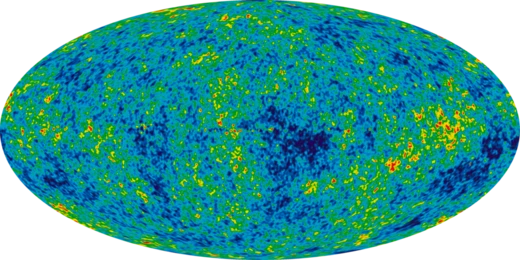
The shape of the universe is examined from two angles: local geometry, which relates to curvature, and global topology, which pertains to overall structure. General relativity can only model local geometry, and there are an infinite number of global shapes that match Einstein's equations. The global structure includes whether the universe is infinite or finite, whether its geometry is flat, positively curved, or negatively curved, and whether the topology is simply connected (like a sphere) or multiply connected (like a torus). Observational evidence from WMAP, BOOMERanG, and Planck indicates that the observable universe is spatially flat to within a 0.4% margin of error of the curvature density parameter, but the global topology remains unknown.
Reader's Guide
The shape of the universe is significant because it addresses fundamental questions about the nature of reality, such as whether the universe is finite or infinite and what its overall structure might be. Measurements of the cosmic microwave background and other astronomical data constrain the spatial curvature to be very close to zero, consistent with a flat universe, but they do not constrain the sign of curvature or the global topology. The Friedmann–Lemaître–Robertson–Walker model is commonly used to approximate the local geometry of the observable universe, assuming homogeneity and isotropy on large scales. However, because the observable universe may be smaller than the entire universe, it is impossible to deduce the global geometry through observation alone. Different mathematical models can be constructed that are consistent with observations and general relativity, leaving the true shape of the universe an open question.
Did You Know?
- A multiply connected space like a 3-torus has everywhere zero curvature but is finite in extent, whereas a flat simply connected space is infinite.
- The observable universe is a roughly spherical region extending about 46 billion light-years in every direction.
- The curvature of any locally isotropic space falls into three cases: zero curvature (flat), positive curvature, or negative curvature.
More in Cosmology Concepts 25-39
Elsewhere in the Cosmology Concepts universe
Spotted an error? Know more?
This is a living reference — every entry is fact-audited, and reader corrections feed straight into our audit queue. Suggest an edit · See this site's audit record