Baryon acoustic oscillations
Standard ruler from early universe sound waves.

Baryon acoustic oscillations (BAO) are fluctuations in the density of visible baryonic matter in the universe, caused by acoustic density waves in the primordial plasma of the early universe. They provide a standard ruler for length scale in cosmology, analogous to how supernovae provide a standard candle, helping to constrain cosmological parameters and understand dark energy.
- field
- Cosmology
- known_for
- Providing a standard ruler for measuring cosmic distances and constraining dark energy
Lore & Background
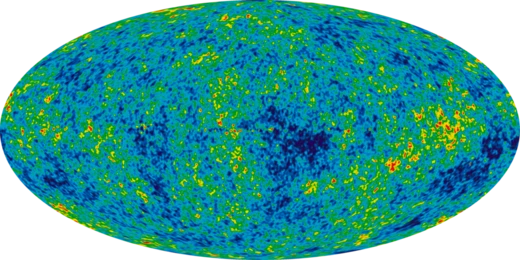
In the early universe, a hot, dense plasma of electrons and baryons trapped photons via Thomson scattering. Overdense regions gravitationally attracted matter, but photon-matter interactions created outward pressure, generating spherical sound waves of baryons and photons moving at slightly over half the speed of light. Dark matter, interacting only gravitationally, remained at the center. The photons decoupled and became the cosmic microwave background (CMB). The resulting configuration left overdensities at both the original anisotropy site and at the sound horizon shell. These ripples seeded galaxy formation, so a statistically greater number of galaxy pairs are separated by the sound horizon distance.
Reader's Guide
Baryon acoustic oscillations are a cornerstone of modern cosmology because they provide a robust, independent method to measure the expansion history of the universe. The sound horizon scale, precisely measured from the CMB, serves as a standard ruler that can be compared to the clustering of galaxies at later epochs. This comparison directly constrains cosmological parameters, particularly the nature of dark energy driving the accelerating expansion. Unlike supernova measurements, BAO offer a geometric probe less sensitive to astrophysical uncertainties. The detection of the BAO signal in galaxy surveys like SDSS validates the bottom-up structure formation model, where small primordial anisotropies grew into large-scale structures. Ongoing and future surveys will refine these measurements, potentially distinguishing between dark energy models and alternative gravity theories.
Did You Know?
- BAO provide a standard ruler for length scale, similar to how supernovae provide a standard candle.
Frequently Asked Questions
What is Baryon acoustic oscillations?
BAO refers to a subtle, large-scale clumping pattern in the distribution of ordinary matter across the cosmos. It is the fossilized imprint of sound waves that once rippled through the hot, dense photon-baryon plasma before the universe became transparent to light.
What are Baryon acoustic oscillations's powers or role?
BAO acts as a built-in cosmic yardstick, a fixed length scale embedded in the galaxy distribution that lets astronomers calibrate distances spanning billions of light-years. In that sense it plays a role parallel to how Type Ia supernovae serve as standard candles for brightness.
What is Baryon acoustic oscillations's origin story?
The oscillations were set in motion during the first few hundred thousand years after the Big Bang, when gravity and radiation pressure alternately compressed and expanded the tightly coupled photon-baryon fluid. Once the universe cooled and atoms formed, those pressure waves froze in place, leaving a characteristic peak in the galaxy correlation function at roughly 150 megaparsecs.
Why is Baryon acoustic oscillations important to cosmology fans?
Because the BAO scale is anchored in well-understood early-universe physics, it gives researchers a reliable reference point for tracking how the expansion rate has changed over cosmic time. That makes it one of the principal tools for constraining the nature of dark energy and the overall geometry of the universe.
How does Baryon acoustic oscillations's story end, or where is it heading?
BAO is not a finished discovery; it remains an actively used probe in ongoing and next-generation surveys such as DESI and Euclid. Its narrative is still unfolding, with each new galaxy catalog sharpening the constraints on dark energy and the expansion history.
More in Cosmology Concepts 1-24
Elsewhere in the Cosmology Concepts universe
Spotted an error? Know more?
This is a living reference — every entry is fact-audited, and reader corrections feed straight into our audit queue. Suggest an edit · See this site's audit record