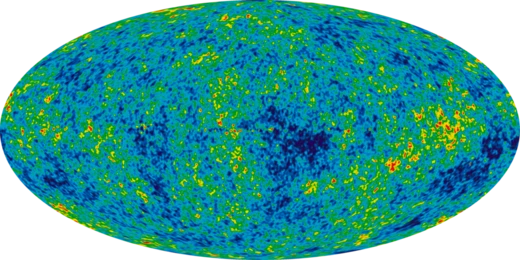
Baryogenesis
Hypothesized process producing matter dominance over antimatter in the early universe.

Baryogenesis (also known as baryosynthesis) is the hypothesized physical process that took place during the early universe to produce baryonic asymmetry—the observation that only matter (baryons) and not antimatter (antibaryons) is detected in the universe, other than in cosmic ray collisions. Since particle physics experiments today always produce matter and antimatter symmetrically, the dominance of matter over antimatter remains unexplained, and baryogenesis theories aim to account for this discrepancy by identifying conditions that favor symmetry breaking and the creation of normal matter.
- field
- Physical cosmology
- known_for
- Explaining the matter-antimatter asymmetry in the universe
- key_conditions
- Sakharov conditions (baryon number violation, C- and CP-symmetry violation, interactions out of thermal equilibrium)
- asymmetry_parameter
- η = (n_B - n_antiB) / n_γ
Lore & Background
Baryogenesis is hypothesized to have occurred during the early universe to produce the observed baryonic asymmetry. Most grand unified theories explicitly break baryon number symmetry, typically invoking reactions mediated by very massive X bosons or massive Higgs bosons. The rate of these events is governed largely by the mass of the intermediate particles, and estimates predict that a large volume of material will occasionally exhibit spontaneous proton decay, which has not been observed, leaving the imbalance between matter and antimatter a mystery.
Reader's Guide
Baryogenesis is central to understanding why the universe is composed of matter rather than antimatter. The Sakharov conditions—baryon number violation, C- and CP-symmetry violation, and interactions out of thermal equilibrium—provide the necessary framework for any baryon-generating interaction. Two main theories are electroweak baryogenesis, occurring during the electroweak phase transition, and GUT baryogenesis, occurring during or shortly after the grand unification epoch. The match between predictions and observations of Big Bang nucleosynthesis constrains the baryon asymmetry factor, and if the model is computed with equal amounts of baryons and antibaryons, they annihilate so completely that not enough baryons remain to create nucleons.
Did You Know?
- Most grand unified theories invoke reactions mediated by very massive X bosons or massive Higgs bosons to account for baryon number violation.
- The three Sakharov conditions necessary for baryogenesis are baryon number violation, C- and CP-symmetry violation, and interactions out of thermal equilibrium.
The Matter-Antimatter Imbalance
The observable universe is overwhelmingly composed of matter, yet no primordial antimatter has ever been detected. The only antiparticles we encounter are the occasional antiprotons produced by cosmic ray collisions, roughly one for every ten thousand protons. This stark asymmetry sits in uncomfortable tension with everything modern particle physics tells us: in laboratory experiments today, matter and antimatter are created in perfectly symmetric pairs. If the same physical laws governed the early universe, one would expect equal quantities of baryons and antibaryons, which would then annihilate each other almost completely, leaving far too little baryonic matter to build the atoms, stars, and galaxies we observe. Big Bang nucleosynthesis calculations confirm this: running the model with equal baryon and antibaryon populations produces an annihilation so thorough that insufficient nucleons remain. The actual imbalance is extraordinarily tiny—on the order of one extra baryon for every sixteen and a half billion particles a fraction of a second after the Big Bang—yet that minuscule surplus is precisely what survived annihilation to become every atom of ordinary matter existing today.
Sakharov's Three Conditions
In 1967, Andrei Sakharov articulated three necessary conditions that any baryon-generating interaction must fulfill to yield more matter than antimatter. His framework was inspired by two landmark discoveries of that era: the cosmic microwave background radiation and CP-violation observed in the neutral kaon system. The first condition demands baryon number violation, without which no excess of baryons over antibaryons can accumulate. The second requires both C-symmetry and CP-symmetry violation; C-violation ensures that interactions producing extra baryons are not perfectly offset by mirror-image interactions producing extra antibaryons, while CP-violation prevents equal production of left-handed baryons with right-handed antibaryons. The third condition stipulates that these asymmetry-generating interactions must operate out of thermal equilibrium, because the thermal average of the Standard Model baryon asymmetry is zero. Together, these three criteria form the foundational checklist against which every proposed baryogenesis mechanism is measured, and they remain the starting point for any theory attempting to explain why the universe contains matter at all.
Theoretical Frameworks and the Standard Model
Two principal theoretical routes have been proposed to explain baryogenesis. Electroweak baryogenesis would unfold during the electroweak phase transition, while grand unified theory baryogenesis would operate during or shortly after the grand unification epoch. Both rely on quantum field theory and statistical physics to model the underlying particle interactions. GUT mechanisms typically invoke reactions mediated by extremely massive X bosons or massive Higgs bosons that explicitly break baryon number symmetry. The rate of these events is governed by the mass of the intermediate particles, and assuming they produced the baryon number we observe today sets an upper mass limit above which the reaction rate would be too slow. Within the Standard Model itself, baryogenesis is possible only if electroweak symmetry breaking constitutes a first-order cosmological phase transition; otherwise sphaleron processes erase any pre-existing baryon asymmetry. In that scenario, a domain wall breaks P-symmetry spontaneously, quarks accumulate on the broken phase side while antiquarks gather on the unbroken side, and CP-violating electroweak interactions generate the necessary asymmetry. However, the Standard Model's predicted net baryon production appears insufficient to account for the observed one extra quark per billion quark-antiquark pairs.
Experimental Constraints and the Unresolved Mystery
Despite decades of theoretical work, the matter-antimatter imbalance remains fundamentally unexplained. GUT-based predictions imply that a large volume of material should occasionally exhibit spontaneous proton decay, yet no such event has ever been observed, casting doubt on those specific mechanisms. In 2010, experiments at Fermilab involving a series of particle collisions reported that the amount of generated matter was approximately one percent larger than the amount of generated antimatter—a discrepancy far greater than the previously assumed one-in-sixteen-billion ratio, though the underlying reason for this apparent mismatch has not yet been identified. The absence of measurable gamma radiation background also rules out the existence of large antimatter domains elsewhere in the universe. Meanwhile, the precise value of the baryon asymmetry factor is tightly constrained by the agreement between Big Bang nucleosynthesis predictions and observational data. Two broad interpretations persist: either the universe began with a nonzero total baryonic number, or it started perfectly symmetric and some yet-unknown particle physics phenomena gradually tipped the balance toward matter. Baryogenesis, once resolved, would be followed by primordial nucleosynthesis, the epoch in which atomic nuclei first coalesced.
Frequently Asked Questions
What is Baryogenesis?
Baryogenesis (sometimes called baryosynthesis) refers to the still-hypothesized sequence of events in the very early universe that tipped the balance in favor of matter over antimatter. It is the process cosmologists invoke to explain why the observable cosmos is made almost entirely of baryons rather than an equal mix of baryons and antibaryons.
What are the Sakharov conditions and why do they matter for Baryogenesis?
The Sakharov conditions are three requirements any viable baryogenesis mechanism must satisfy: baryon-number violation, C- and CP-symmetry violation, and departures from thermal equilibrium. Without all three in play simultaneously, a theory cannot generate the net excess of matter we observe today.
Why is Baryogenesis important in cosmology?
Baryogenesis sits at the heart of one of the biggest open questions in physics—why the universe contains matter at all instead of annihilating into pure radiation. Solving it would point to new physics beyond the Standard Model, since known particle interactions produce matter and antimatter in equal amounts.
How is the baryon asymmetry measured?
Cosmologists quantify the matter-antimatter imbalance with the asymmetry parameter η, defined as the difference between baryon and antibaryon number densities divided by the photon number density. Observations of the cosmic microwave background pin this value to roughly one part in ten billion.
Is Baryogenesis confirmed or still theoretical?
Baryogenesis remains a hypothesis rather than a confirmed mechanism; we know the asymmetry exists from observation, but no single accepted theory yet reproduces the exact amount of excess matter. It is an active research area in physical cosmology, with candidates ranging from electroweak baryogenesis to leptogenesis.
More in Cosmology Concepts 1-24
Elsewhere in the Cosmology Concepts universe
Spotted an error? Know more?
This is a living reference — every entry is fact-audited, and reader corrections feed straight into our audit queue. Suggest an edit · See this site's audit record