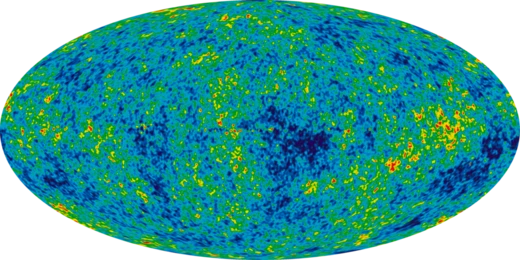
Age of the universe
Age of the universe is 13.8 billion years.

The age of the universe is a fundamental concept in physical cosmology, representing the cosmological time elapsed since the scale factor of the universe extrapolated to zero—the moment of the Big Bang. According to the latest models and data from the Planck project, this age is 13.8 billion years. Determining the age of the universe is a central goal of modern astronomy, relying on two distinct approaches: one based on the Lambda-CDM model and early-universe measurements like the cosmic microwave background, and the other based on a 'distance ladder' of stars and local measurements.
- current_estimated_age
- 13.8 billion years
- primary_methods
- Lambda-CDM model and stellar distance ladder
Lore & Background
In the 18th century, the concept that Earth was millions or billions of years old emerged, but most scientists through the 19th and early 20th centuries assumed the universe was eternal and static, not the specific 'steady state' model (which wasn't proposed until 1948). The first scientific theories suggesting a finite age came from Edwin Hubble's discovery of cosmic expansion and from stellar evolution timescales, not from the heat death paradox. Hubble's initial age estimate was very low because his value for the Hubble constant was too high (about 500 km/s/Mpc), making the expansion rate appear faster; this was due to underestimated galaxy distances, not because galaxies were thought much closer.
Reader's Guide
The age of the universe is a cornerstone of modern cosmology, derived from the Lambda-CDM concordance model, which describes expansion from a hot, dense state over about 13.8 billion years. Two methods—one using early-universe features like the cosmic microwave background, the other using a ladder of stars—give slightly different Hubble constant values, which are then used to calculate the age. The Planck project data, along with earlier WMAP data, have refined this estimate by removing the largest source of error: galaxy distances. The International Astronomical Union defines the age of the universe as the duration of Lambda-CDM expansion, or the time elapsed since the Big Bang within the observable universe. This concept resolved centuries of debate, moving from a presumed eternal, static universe to a finite, expanding one, and continues to be refined through high-precision observations.
Did You Know?
- The age of the universe is 13.8 billion years according to the latest models and Planck project data.
Two Paths to a Single Number
The age of the universe, currently pinned at 13.8 billion years by the Planck project, does not emerge from a single measurement but from two fundamentally different lines of inquiry. The first route leans on particle physics: the Lambda-CDM concordance model, which describes the cosmos evolving from an extraordinarily hot, dense, and uniform primordial state. This framework is calibrated against features imprinted in the very earliest epochs, most notably the cosmic microwave background. The second route is far more local and empirical. Astronomers build a distance ladder out of successive classes of stars, measuring their distances and relative velocities to infer how fast the universe is expanding today. Because these two strategies rest on different physics and different observational windows—one looking back to the universe's infancy, the other probing its mature present—they yield slightly different values for the Hubble constant. Yet when that constant is fed into the age formula, both paths land within the same narrow band, and that band comfortably contains the ages derived from the oldest stars we can observe.
Shaking the Assumption of Eternity
For most of the eighteenth and nineteenth centuries, the prevailing scientific picture held that the universe was essentially unchanging and eternal; stars might be born and die, but the grand structure endured forever. The first serious crack in that assumption came not from astronomy but from thermodynamics. Formalized in the mid-nineteenth century, the second law of entropy implied that any closed system left to run indefinitely would settle into thermal equilibrium: one uniform temperature, no stars, no life. An infinitely old universe, in other words, should be dead, and no one at the time could reconcile that prediction with the vibrant cosmos around them. In 1917, Einstein built the first cosmological model on his new general relativity, but he inserted a cosmological constant to force a static universe, a choice Arthur Eddington later showed to be unstable. The decisive blow arrived in 1929, when Edwin Hubble paired Vesto Slipher's recession-velocity measurements with his own distance estimates to distant nebulae now recognized as galaxies outside the Milky Way. The farther a galaxy appeared, the greater its redshift and the faster it was receding. The universe was not static; it was expanding, and its history had a beginning.
The Accidental Echo of Creation
In 1964, Arno Penzias and Robert Woodrow Wilson were calibrating a supersensitive radio antenna, hoping to catch reflected microwave signals. Instead, they found a persistent, low-level hum in the microwave band that was uniform across the entire sky, present day and night, and clearly not originating from Earth, the Sun, or the Milky Way. Less than sixty miles away, a team led by Robert Dicke, with Jim Peebles and David Wilkinson, was actively searching for exactly that kind of residual radiation, a faint thermal afterglow predicted by Big Bang cosmology. When the two groups realized their signals matched, the mystery noise was identified as the cosmic microwave background, the cooled remnant of the universe's first hot, dense phase. The 1965 announcement effectively ended the last serious scientific doubt about whether the universe had expanded from a hot initial state. Subsequent missions, particularly WMAP launched in 2001 and Planck launched in 2009, mapped that background with ever-greater precision, locking down the Hubble constant and the 13.8-billion-year age largely independent of the galaxy-distance ladder that had introduced the largest source of error.
Chasing the Hubble Constant
The single number that most directly feeds into the age calculation, the Hubble constant, has been one of cosmology's most contested quantities. Hubble's own 1929 estimate produced an unreasonably young universe because the distances to galaxies were substantially underestimated. A far more reliable measurement arrived in 1958 from Allan Sandage, whose value sat close to the range that would become standard. Yet even Sandage, like Einstein before him, was skeptical of his own result and proposed alternative cosmogonic theories to explain the tension. That tension was gradually resolved not by a new telescope but by better stellar-evolution models. By 2021, applying the latest such models to the oldest known stars yielded ages of 14.27 plus or minus 0.80 billion years for the so-called Methuselah star and 13.8 plus or minus 4 billion years for BD plus 17 degrees 3248, both comfortably consistent with the Planck 2018 figure. The space-based observatories WMAP and Planck further tightened the picture by determining the expansion rate directly from the cosmic microwave background, sidestepping the distance-ladder uncertainties that had plagued ground-based work for decades.
Frequently Asked Questions
Who is Age of the universe?
Age of the universe is the total span of cosmological time that has passed since the Big Bang, the moment when the cosmic scale factor is extrapolated back to zero. It is one of the most fundamental parameters in physical cosmology.
What are Age of the universe's powers or role?
It serves as the master clock for the entire cosmos, setting the timeline against which every galaxy, star, and particle's evolution is measured. Without a reliable value for it, models of structure formation and stellar evolution lose their anchor point.
How do fans determine Age of the universe's current value?
Astronomers pin it down through two independent routes: fitting the Lambda-CDM model to early-universe data such as the cosmic microwave background, and climbing a stellar distance ladder built from local parallax and variable-star measurements. Both routes converge on roughly 13.8 billion years.
Why is Age of the universe important to the cosmology community?
It is the single number that ties together the expansion rate, the composition of the universe, and the validity of the Big Bang narrative itself. Disagreement between the two measurement methods would signal new physics beyond the standard model.
What is Age of the universe's latest confirmed status?
Based on the most recent Planck satellite data and concordant local measurements, the accepted figure stands at 13.8 billion years. This value is treated as the canonical baseline in current cosmological literature.
More in Cosmology Concepts 1-24
Elsewhere in the Cosmology Concepts universe
Spotted an error? Know more?
This is a living reference — every entry is fact-audited, and reader corrections feed straight into our audit queue. Suggest an edit · See this site's audit record