Ultimate fate of the universe
Scientific hypotheses predict the universe's possible end.

The ultimate fate of the universe is a topic in physical cosmology that explores possible scenarios for the evolution and end of the universe based on scientific hypotheses. The subject became a valid cosmological question after Edwin Hubble's observations in the 1930s–1950s showed that galaxies are moving away from each other, leading to the Big Bang theory.
- field
- Physical cosmology
- current_consensus
- Universe is flat and will expand forever
Lore & Background
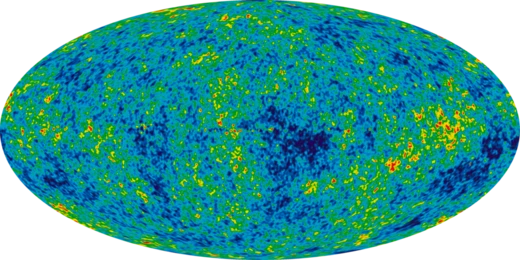
Several solutions to its equations exist, each implying a possible fate. The density parameter Ω, defined as average matter density divided by a critical value, determines the universe's geometry: flat (Ω=1), open (Ω<1), or closed (Ω>1). The current consensus is that the ultimate fate depends on the universe's shape, dark energy content, and the equation of state. Recent observations suggest the expansion rate has been increasing since 7.5 billion years after the Big Bang, supporting an open universe, though Wilkinson Microwave Anisotropy Probe data indicate the universe is flat or very close to flat.
Reader's Guide
The significance of the ultimate fate of the universe lies in its transformation from a speculative topic to a testable scientific question, grounded in general relativity and observational cosmology. The introduction of the density parameter Ω allowed cosmologists to link geometry to fate: a closed universe (Ω>1) could lead to a Big Crunch, an open universe (Ω<1) to eternal expansion, and a flat universe (Ω=1) to continued expansion. Even a closed universe with dark energy may expand forever, as in the Lambda-CDM model, where dark energy constitutes about 68% of the universe's energy content. The legacy of this field is its ongoing refinement through observations from telescopes like Euclid, Nancy Grace Roman, and James Webb, which aim to clarify whether dark energy is constant or time-varying. The ultimate fate remains uncertain, but the scientific framework ensures it is a question of evidence, not myth.
Did You Know?
- Edwin Hubble's observations in the 1930s–1950s found galaxies moving away from each other, leading to the Big Bang theory.
- The density parameter Ω determines whether the universe is flat, open, or closed, corresponding to Ω equal to, less than, or greater than 1.
More in Cosmology Concepts 25-39
Elsewhere in the Cosmology Concepts universe
Spotted an error? Know more?
This is a living reference — every entry is fact-audited, and reader corrections feed straight into our audit queue. Suggest an edit · See this site's audit record