Recombination (cosmology)
Epoch when electrons and protons first formed neutral hydrogen atoms.

Recombination is the epoch in cosmology during which charged electrons and protons first became bound to form electrically neutral hydrogen atoms. The term 'recombination' is historically misleading because the Big Bang theory does not posit that protons and electrons had been combined before; the name predates the Big Bang hypothesis becoming the primary theory of the universe's birth.
- epoch
- Recombination
- field
- Cosmology
- key_process
- Formation of neutral hydrogen atoms from free electrons and protons
- related_event
- Photon decoupling (same time frame, distinct physical process)
Lore & Background
The time frame for recombination can be estimated from the temperature of the cosmic microwave background (CMB), which is a blackbody spectrum shifted by the expansion of the universe. The ratio of baryons to photons, known from measurements including those by the Planck satellite, is around 10⁻⁹.
Reader's Guide
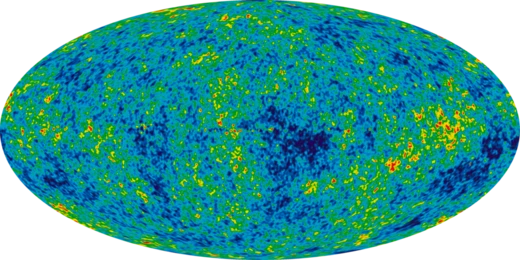
Recombination marks a critical transition in the early universe, when the plasma of free electrons and protons cooled enough to form neutral hydrogen atoms. This epoch is fundamental to cosmology because it directly led to the decoupling of photons, producing the cosmic microwave background radiation that provides a snapshot of the universe at that time. The Saha equation gives a rough estimate of the recombination redshift by assuming thermal equilibrium between matter and radiation. The free electron fraction, defined as the ratio of free electrons to total hydrogen, describes the cosmic ionization history. Recombination is distinct from photon decoupling, though they occur in the same time frame. Understanding recombination is essential for interpreting the CMB and for models of structure formation, as the neutral hydrogen allowed matter to clump gravitationally without being disrupted by radiation pressure.
Did You Know?
- The 're-' in 'recombination' is misleading because the Big Bang theory does not posit that protons and electrons had been combined before.
- Photon decoupling, which produced the cosmic microwave background, occurred in the same time frame as recombination but is a distinct physical process.
- The ratio of baryons to photons, known from Planck satellite measurements, is around 10⁻⁹.
Frequently Asked Questions
What is Recombination in cosmology?
Recombination is the epoch when free electrons and protons first bound together to form electrically neutral hydrogen atoms. It marks the universe's shift from an opaque plasma to a state where light could finally travel freely.
What is Recombination's role in the cosmic timeline?
Recombination acts as the critical turning point where the universe became transparent to radiation. It occurs in the same time frame as photon decoupling, though the two are distinct physical processes.
Why is it called 'recombination' if nothing was combined before?
The name is a historical artifact that predates the Big Bang model becoming the dominant theory of cosmic origins. The term simply stuck in the literature even after the framework made clear that protons and electrons had never been bound prior to this event.
Why is Recombination important to cosmology?
Without Recombination, the universe would have remained a light-scattering plasma, and neither the cosmic microwave background nor the large-scale structure we observe today could exist. It effectively set the stage for stars, galaxies, and all later cosmic evolution.
How does Recombination's 'story' resolve?
The epoch concludes with photons decoupling from matter, leaving the universe transparent and allowing light to stream unimpeded across space. That ancient glow, redshifted over billions of years, is what we detect today as the cosmic microwave background.
More in Cosmology Concepts 25-39
Elsewhere in the Cosmology Concepts universe
Spotted an error? Know more?
This is a living reference — every entry is fact-audited, and reader corrections feed straight into our audit queue. Suggest an edit · See this site's audit record