Multiverse
Hypothetical set of all universes, debated in science and philosophy.

The multiverse is the hypothetical set of all universes, presumed to comprise everything that exists: space, time, matter, energy, information, and the physical laws and constants that describe them. The concept has been discussed throughout history, evolving and being debated in cosmology, physics, and philosophy, with some physicists arguing it is a philosophical notion rather than a scientific hypothesis due to lack of empirical falsification.
- field
- Cosmology, physics, philosophy
- known_for
- Hypothetical set of all universes; proposed classification schemes by Max Tegmark and Brian Greene
- proponents
- Lee Smolin, Don Page, Brian Greene, Max Tegmark, Alan Guth, Andrei Linde, Michio Kaku, David Deutsch, Leonard Susskind, Alexander Vilenkin, Yasunori Nomura, Raj Pathria, Laura Mersini-Houghton, Neil d
- skeptics
- Sabine Hossenfelder, David Gross, Paul Steinhardt, Anna Ijjas, Abraham Loeb, David Spergel, Neil Turok, Viatcheslav Mukhanov, Michael S. Turner, Roger Penrose, George Ellis, Joe Silk, Carlo Rovelli, A
Lore & Background
The concept of multiple universes has ancient antecedents. The pre-Socratic Greek philosopher Anaximander in the sixth century BCE may have suggested infinite worlds, though it is debated whether he believed in multiple co-existent or successive worlds. Ancient Indian Hindu and Buddhist thinkers also postulated multiple worlds. The first figures definitively attributed with the concept of innumerable worlds are the Ancient Greek Atomists: Leucippus and Democritus in the 5th century BCE, followed by Epicurus and the Roman Epicurean Lucretius. In the third century BCE, Chrysippus suggested the world eternally expired and regenerated, implying multiple universes across time. In the Renaissance, Giordano Bruno expressed the concept of infinite worlds.
Reader's Guide
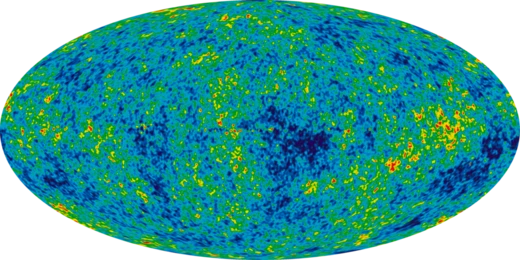
In 2015, astrophysicist Dr. Ranga-Ram Chary analyzed cosmic radiation spectrum and found a signal possibly indicating a parallel universe, though he noted a 30% chance it is noise and that unusual claims require a very high burden of proof. Critics like Paul Davies and George Ellis argue multiverse hypotheses lack testability and falsifiability, comparing them to theological discussions. The anthropic principle is often invoked to explain the apparent fine-tuning of our universe, with proponents like Max Tegmark arguing the multiverse is simpler and more elegant.
Did You Know?
- Max Tegmark's four-level classification includes Level I: extension of our universe, Level II: universes with different physical constants, Level III: many-worlds interpretation of quantum mechanics, and Level IV: ultima
- Brian Greene's nine types of multiverses include quilted, inflationary, brane, cyclic, landscape, quantum, holographic, simulated, and ultimate.
- No statistically significant evidence of other universes has been found, despite analyses of data from the Wilkinson Microwave Anisotropy Probe and the Planck satellite.
More in Cosmology Concepts 1-24
Elsewhere in the Cosmology Concepts universe
Spotted an error? Know more?
This is a living reference — every entry is fact-audited, and reader corrections feed straight into our audit queue. Suggest an edit · See this site's audit record