Observational cosmology
Study of the universe through observation and measurement.

Observational cosmology is the study of the structure, evolution, and origin of the universe through observation, using instruments such as telescopes and cosmic ray detectors. Its modern form emerged after the Shapley–Curtis debate, when observations established that the universe extends beyond the Milky Way, and was shaped by early disputes between steady state theorists and proponents of Big Bang cosmology.
- field
- Astronomy and cosmology
- known_for
- Providing observational foundations for the expanding universe, cosmic microwave background detection, and the Lambda-CDM model
- key_instruments
- Telescopes, cosmic ray detectors, Dicke radiometers, spectroscopes
Lore & Background
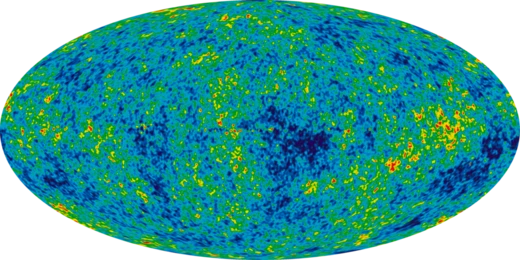
Modern observational cosmology continues to test theoretical predictions. Redshift surveys such as the CfA Redshift Survey, the 2dF Galaxy Redshift Survey, and the Sloan Digital Sky Survey map the three-dimensional distribution of matter. Observations of the cosmic microwave background, especially through the WMAP experiment, have verified the six-parameter Lambda-CDM model. Observational evidence for dark matter and dark energy, the latter obtained from supernova standard candles in the late 1990s, has heavily influenced theoretical modeling.
Reader's Guide
Observational cosmology is significant because it transformed cosmology from a speculative discipline into a data-driven science. By establishing the scale of the universe through distance measurements and Hubble's law, it provided the empirical basis for the expanding universe theory. The detection of the cosmic microwave background confirmed the hot Big Bang model and eliminated steady state alternatives. Modern observations, including redshift surveys and cosmic microwave background experiments, have refined the Lambda-CDM model, which explains the universe's evolution in terms of its constituent material. These efforts have also revealed the existence of dark matter and dark energy, fundamentally altering our understanding of cosmic composition and dynamics. The legacy of observational cosmology lies in its ability to test and validate theoretical models, driving the field into its 'Golden Age' and providing a robust framework for future exploration.
Did You Know?
- Observational evidence for dark energy was obtained in the late 1990s when trying to calibrate the Hubble diagram with accurate supernova standard candles.
From Static to Dynamic: The Theoretical Awakening
Physical cosmology traces its intellectual roots to the Copernican principle—the assumption that celestial bodies obey the same physical laws as objects on Earth—combined with Newtonian mechanics, which first rendered those laws mathematically tractable. The modern discipline, however, truly took shape in 1915 when Albert Einstein unveiled general relativity, recasting gravity as a geometric property of spacetime rather than a conventional force. Einstein initially resisted the implication that the cosmos might be dynamic. Because distributed mass gravitationally pulls matter together over time, his original equations did not naturally yield a static universe. In 1917 he introduced a cosmological constant into his field equations specifically to hold the universe still, producing a model in which space is finite yet unbounded, analogous to the surface of a sphere. That construction proved unstable; even tiny perturbations would tip it into expansion or contraction. Alexander Friedmann, working in the early 1920s, demonstrated that Einstein's static solution was merely one member of a broader family of cosmological solutions, all consistent with general relativity and the cosmological principle. His equations described universes that could expand or contract and whose geometry might be open, flat, or closed.
The 1920s: Seeing Beyond the Milky Way
In the 1910s, Vesto Slipher and later Carl Wilhelm Wirtz interpreted the redshifts of spiral nebulae as Doppler shifts indicating recession from Earth. Yet confirming those nebulae were truly external galaxies required solving a stubborn problem: measuring astronomical distances. One approach compares an object's physical size to its angular size, but that demands knowing the physical size in advance. Another uses brightness and an assumed intrinsic luminosity with the inverse-square law. Neither method was straightforward, so the cosmological implications of the redshifts went largely unrecognized. In 1927, Belgian priest Georges Lemaître independently derived the Friedmann equations and, building on the observed recession of spiral nebulae, proposed that the universe began with the explosion of a primeval atom—a concept later named the Big Bang. Two years later, Edwin Hubble supplied the crucial observational anchor. By measuring the brightness of Cepheid variable stars, he determined distances to the spiral nebulae, confirming they were galaxies beyond the Milky Way. He then discovered a proportional relationship between a galaxy's redshift and its distance, now called Hubble's law, though his numerical factor was off by a factor of ten because he did not yet distinguish between types of Cepheid variables.
The Standard Model and Its Dark Pillars
Dramatic advances in observational cosmology since the 1990s—spanning precise measurements of the cosmic microwave background, observations of distant supernovae, and galaxy redshift surveys—have crystallized what is now called the standard model of cosmology. Although this framework requires the universe to contain vast quantities of dark matter and dark energy, whose fundamental nature remains poorly understood, it yields detailed predictions that align in excellent agreement with a wide range of diverse observations. The Big Bang theory, originally proposed by Georges Lemaître and further developed by George Gamow, has become the dominant cosmological model. For years, support was evenly divided between the Big Bang and Fred Hoyle's steady-state model, in which new matter is continuously created as galaxies recede from one another, keeping the universe roughly the same at any point in time. The discovery of the cosmic microwave background in 1965 tipped the balance decisively toward the Big Bang, and since the precise measurements made by the Cosmic Background Explorer in the early 1990s, few cosmologists have seriously proposed alternative theories of the cosmos's origin and evolution.
A Science Woven from Many Disciplines
Observational cosmology does not exist in isolation; it draws heavily on the work of many disparate areas of both theoretical and applied physics. Relevant fields include particle physics experiments and theory, theoretical and observational astrophysics, general relativity, quantum mechanics, and plasma physics. This interdisciplinary character reflects the enormous range of phenomena a cosmological model must capture, from the behavior of subatomic particles in the early universe to the large-scale dynamics of galaxy clusters. The lightest chemical elements, primarily hydrogen and helium, were forged during the Big Bang through nucleosynthesis, a process that connects cosmology directly to nuclear physics. In a subsequent sequence of stellar nucleosynthesis reactions, smaller atomic nuclei are combined into larger ones, linking the story of cosmic origins to the life cycles of stars. At its core, a cosmological model offers a mathematical account of the universe's largest-scale structures and their dynamics, enabling the exploration of deep questions regarding how the universe began, its present architecture, its ongoing evolution, and where it is ultimately headed.
Frequently Asked Questions
Who is Observational Cosmology?
Observational Cosmology is the branch of astronomy that maps the universe's structure, history, and origins purely through what we can see and measure. Rather than relying on pure theory, it builds its picture of reality using light, radiation, and particle data collected from space and Earth.
What are Observational Cosmology's powers/role?
Its primary tools are telescopes, spectroscopes, cosmic ray detectors, and specialized radiometers such as the Dicke radiometer. With these instruments it measures redshifts, maps the cosmic microwave background, and tracks the large-scale distribution of galaxies to test cosmological models.
How did Observational Cosmology's story begin?
The modern era kicked off after the 1920s Shapley–Curtis debate, when observations finally proved that spiral nebulae were separate galaxies outside the Milky Way. From there the field grew through the heated rivalry between steady-state advocates and Big Bang supporters, each side demanding new measurements to settle the score.
What is Observational Cosmology's signature victory?
The detection of the cosmic microwave background radiation stands as its most iconic triumph, providing concrete evidence that the universe began in a hot, dense state. Alongside that, its data underpins the Lambda-CDM model, which remains the standard framework for describing dark energy, dark matter, and cosmic expansion.
Why is Observational Cosmology important?
Without its measurements, theoretical cosmology would be largely untestable speculation. It is the field that turns abstract equations about the Big Bang, dark energy, and galaxy formation into empirically grounded science, anchoring our entire understanding of cosmic history in real data.
More in Cosmology Concepts 25-39
Elsewhere in the Cosmology Concepts universe
Spotted an error? Know more?
This is a living reference — every entry is fact-audited, and reader corrections feed straight into our audit queue. Suggest an edit · See this site's audit record