Missing baryon problem
Missing baryons are baryonic matter not yet observed in the recent universe.

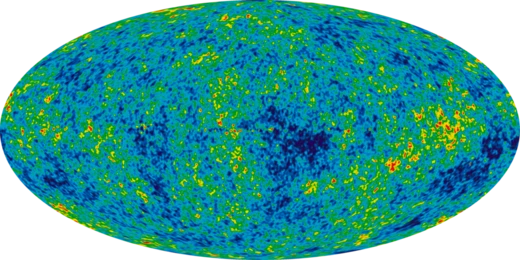
The missing baryon problem is an observed discrepancy in cosmology between the amount of baryonic matter detected from shortly after the Big Bang and from more recent epochs. Observations of the cosmic microwave background and Big Bang nucleosynthesis studies indicate that baryonic matter accounts for approximately 4.8% of the universe's energy contents, yet a census of baryons in the recent observable universe accounts for less than half of that amount. This problem is distinct from the dark matter problem, which is non-baryonic in nature.
- field
- Cosmology
- known_for
- Discrepancy between early-universe and late-universe baryon counts
- early_universe_baryon_fraction
- ~4.8% of universe's energy contents
- late_universe_observed_fraction
- Less than half of early-universe amount
- resolution_mechanism
- Warm-hot intergalactic medium (WHIM)
Lore & Background
The missing baryon problem arises from two independent early-universe measurements: Big Bang nucleosynthesis, which predicts baryonic matter makes up 4–5% of the universe's critical density based on observed element abundances, and analysis of cosmic microwave background anisotropies, which yields a baryon fraction on the order of 5%. These agree that baryonic matter accounts for about 4.8% of the universe's energy contents. However, direct summation of known baryonic matter in the late universe—using techniques such as Lyman-alpha forest observations, gravitational microlensing, and the Sunyaev–Zel'dovich effect—found that observed baryons account for only about 60% of the total predicted amount, with the remainder termed 'missing.'
Reader's Guide
The missing baryon problem highlights a fundamental gap in our understanding of where ordinary matter resides in the present-day universe. Prior to its resolution, the census of known baryons tallied to around 60% of total baryons, with about 7% in stars and galaxies, 28% in the Lyman-alpha forest, and smaller fractions in the circum-galactic medium and intracluster medium. The problem's resolution confirms that baryons are not truly missing but exist in a diffuse, ionized state that is difficult to detect, reinforcing the standard cosmological model.
Did You Know?
- The missing baryon problem is different from the dark matter problem, which is non-baryonic in nature.
- The Lyman-alpha forest contains around 28% of the baryons in the universe.
- The Sunyaev–Zel'dovich effect can detect baryons in the WHIM by measuring the y-parameter from inverse Compton scattering of CMB photons.
More in Cosmology Concepts 1-24
Elsewhere in the Cosmology Concepts universe
Spotted an error? Know more?
This is a living reference — every entry is fact-audited, and reader corrections feed straight into our audit queue. Suggest an edit · See this site's audit record