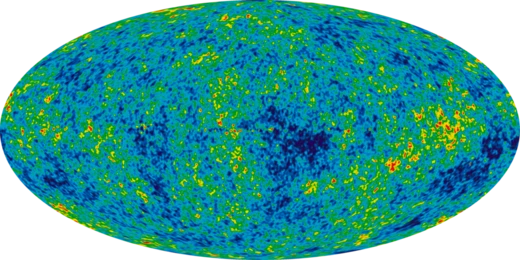
Universe
The totality of all space, time, matter, and energy.
The universe is everything that exists: all matter, all energy, and every structure they create, from the smallest subatomic particles to the largest galactic filaments. Cosmology, a field that took shape in the early 20th century, has shown that the universe has been expanding since it began as a dense fireball in an event known as the Big Bang. The part we can observe currently spans about 93 billion light-years across, but the universe’s total size remains unknown.
Early cosmological models placed Earth at the center, but the Scientific Revolution brought a heliocentric view. Better observations later revealed that the Sun is just one of a few hundred billion stars in the Milky Way, which itself is one of a few hundred billion galaxies in the observable universe. On the largest scales, galaxies are spread uniformly and look the same in every direction. On smaller scales, they cluster into groups and superclusters, forming enormous filaments and voids that give space a foam-like structure. Discoveries in the early 20th century, including general relativity, led to the modern picture of an expanding, isotropic, and homogeneous universe. Evidence has piled up for the Big Bang theory: an initial hot fireball cooled and became less dense as it expanded, allowing the first subatomic particles and simple atoms to form. Giant clouds of hydrogen and helium were gradually pulled toward denser regions, creating the first galaxies, stars, and eventually everything else.
By studying how gravity affects both matter and light, scientists have found that the universe contains far more matter than what we can see—stars, galaxies, nebulae, and interstellar gas. This invisible matter is called dark matter. In the widely accepted ΛCDM model, dark matter makes up about 26% of the universe’s mass and energy, while dark energy—a mysterious force driving the expansion to accelerate—accounts for about 69%. Ordinary (baryonic) matter, the stuff of stars, planets, and visible gas, makes up only about 5% of the universe. Of that ordinary matter, stars, planets, and visible gas clouds form just about 6%.
Many competing ideas exist about the universe’s ultimate fate and about what, if anything, came before the Big Bang.
The physical universe is often defined as “the totality of all space and time; all that is, has been, and will be.” It contains all energy and matter, including planets, moons, stars, galaxies, and the contents of intergalactic space. Some philosophers and scientists also include ideas and abstract concepts—like mathematics and logic—in the definition. The word universe can also refer to the cosmos, the world, or nature.
The word “universe” comes from Old French *univers*, which traces back to Latin *universum*, meaning “combined into one.” Cicero and later Latin authors used *universum* in much the same way we use the word today. Ancient Greek philosophers from Pythagoras onward used terms like *to pan* (“the all”), meaning all matter and space, and *ta panta* (“all things”), which didn’t always include the void. Another Greek synonym was *kosmos* (“the world, the cosmos”). Latin authors had *mundus*, *natura*, and *universum*, and modern languages have equivalents like German *Weltall*, *Kosmos*, and *Universum*. In English, synonyms include everything (as in the theory of everything), the cosmos (as in cosmology), the world (as in the many-worlds interpretation), and nature (as in natural laws).
The leading model for the universe’s evolution is the Big Bang theory. In this model, the earliest state was extremely hot and dense, but the universe cooled as it expanded. The model relies on general relativity and assumptions that space is homogeneous and isotropic. A version with a cosmological constant (Lambda) and cold dark matter—the Lambda-CDM model—matches most observations very well. Much of the very earliest time is not understood. An intense period of rapid expansion called cosmic inflation is proposed to explain many observations and set the initial conditions for the Lambda-CDM model.
Within the first fraction of a second, the universe was so dense and energetic that all particles in the Standard Model were in equilibrium. As expansion cooled it, the universe went through phase transitions, like water freezing. Various elementary particles stabilized, producing a plasma of electrons, protons, and neutrons, with very energetic photons preventing them from binding until about one minute after the Big Bang. Over the next few minutes, some protons and neutrons fused into atomic nuclei through Big Bang nucleosynthesis. This process lasted about 15 minutes, producing helium, small amounts of deuterium, and traces of lithium. No other nuclei formed in significant amounts. All neutrons that didn’t fuse decayed into protons and electrons.
- Age
- 13.8 billion years
- Diameter (observable)
- 93 billion light-years
- Composition (ordinary matter)
- 4.84% ± 0.1%
- Composition (dark matter)
- 25.8% ± 1.1%
- Composition (dark energy)
- 69.2% ± 1.2%
- Shape at largest scale
- Isotropic and homogeneous
- Structure
- Foam-like, with filaments and voids
Lore & Background
The universe contains all energy and matter, including planets, moons, stars, galaxies, and intergalactic space. Some philosophers and scientists support the inclusion of ideas and abstract concepts—such as mathematics and logic—in its definition. The word 'universe' derives from the Latin 'universus', meaning 'combined into one', and was used by Cicero and later Latin authors in senses similar to the modern English word. The prevailing model for the evolution of the universe is the Big Bang theory, based on general relativity and symmetry assumptions such as homogeneity and isotropy. The earliest state was extremely hot and dense, cooling during expansion. An intense period called cosmic inflation is postulated to explain many observations. Within the first fraction of a second, the universe was extremely dense, with all Standard Model particles in equilibrium. As it cooled, phase transitions occurred, producing a plasma of electrons, protons, and neutrons. About one minute after the Big Bang, nucleosynthesis began, lasting about 15 minutes and producing helium, deuterium, and traces of lithium. At the largest scale, galaxies are distributed uniformly and the same in all directions. At smaller scales, galaxies form clusters and superclusters, creating immense filaments and voids—a vast foam-like structure. The universe contains much more matter than visible objects account for; this unseen matter is called dark matter. Dark energy, a mysterious form of energy, is responsible for the acceleration of the universe's expansion. There are many competing hypotheses about the ultimate fate of the universe and about what, if anything, preceded the Big Bang.
Reader's Guide
The universe is the central subject of cosmology, the scientific study of its origin, evolution, and large-scale structure. Its definition as 'the totality of all space and time; all that is, has been, and will be' underpins all physical science. The discovery that the universe is expanding, isotropic, and homogeneous at the largest scales revolutionized human understanding, replacing earlier geocentric and heliocentric models. The Big Bang theory, supported by evidence such as the cosmic microwave background and nucleosynthesis, provides the prevailing model for its evolution. The identification of dark matter and dark energy—together constituting about 95% of the universe's mass-energy—has opened profound questions about fundamental physics. The observable universe's diameter of 93 billion light-years and the unknown total size highlight both the vastness and the limits of human knowledge. The universe's foam-like structure of filaments and voids reveals the imprint of initial density fluctuations. Its significance lies in being the ultimate context for all existence, and its study continues to challenge and expand the frontiers of science.
Did You Know?
- The observable universe is approximately 93 billion light-years in diameter, but the total size of the universe is not known.
- Ordinary baryonic matter composes only 4.84% ± 0.1% of the universe; dark matter accounts for about 25.8% and dark energy for about 69.2%.
- The word 'universe' derives from the Latin 'universus', meaning 'combined into one', and was used by Cicero.
More in Cosmology Concepts 1-24
Spotted an error? Know more?
This is a living reference — every entry is fact-audited, and reader corrections feed straight into our audit queue. Suggest an edit · See this site's audit record