Redshift
Redshift measures the stretching of light from moving or distant sources.
In physics, redshift describes a lengthening of the wavelength of electromagnetic radiation, such as light, which also means its frequency drops. The reverse—shorter wavelength, higher frequency, and greater energy—is called blueshift. Within astronomy and cosmology, three distinct types of redshift are recognized: one caused by the relative motion of the source (Doppler redshift), another from radiation climbing out of a gravitational field (gravitational redshift), and a third due to the expansion of the universe (cosmological redshift). The symbol *z* typically represents the redshift value, defined as the fractional change in wavelength; the ratio of the observed to emitted wavelength is written as 1 + *z* (greater than 1 for redshift, less than 1 for blueshift). Automated surveys of astronomical redshifts are a key method for studying the universe’s large-scale structure. Redshift and blueshift also connect to photon energy and, through Planck’s law, to an equivalent blackbody temperature.
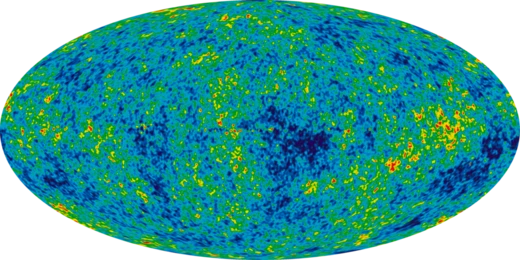
Strong redshifting can turn a gamma ray into an X-ray, or visible light into radio waves. The primordial radiation from the Big Bang, initially at 3000 K, has redshifted into the 3 K cosmic microwave background. More subtle shifts appear in spectroscopic observations of celestial objects, and terrestrial technologies like Doppler radar and radar guns also rely on the same principle. Gravitational waves, moving at light speed, undergo identical redshift effects. Other processes—such as scattering or optical effects—can alter electromagnetic frequencies, but these are distinct from astronomical redshift and are not usually called by that name.
The history of redshift began in the 1800s with classical wave mechanics and studies of the Doppler effect. Austrian mathematician Christian Doppler gave the first known physical explanation in 1842, and Dutch scientist Christophorus Buys Ballot confirmed it for sound waves in 1845. Doppler correctly predicted the effect applied to all waves and suggested that stars’ colors might reflect their motion relative to Earth. Unaware of Doppler’s work, French physicist Hippolyte Fizeau proposed in 1848 that shifts in stellar spectral lines could measure motion relative to Earth. In 1850, François-Napoléon-Marie Moigno analyzed both ideas in a publication read by James Clerk Maxwell and William Huggins; Huggins initially thought star colors came from chemistry, but by 1868 he became the first to determine a star’s recessional velocity using spectral shifts.
Optical redshift was confirmed in 1871 through observations of Fraunhofer lines during solar rotation, showing a shift of about 0.1 Å toward the red. In 1887, Hermann Carl Vogel and Julius Scheiner discovered the “annual Doppler effect”—a yearly variation in the Doppler shift of stars near the ecliptic, caused by Earth’s orbital motion. Aristarkh Belopolsky verified optical redshift in a laboratory in 1901 using rotating mirrors. Starting in 1912, Vesto Slipher observed a blueshift in the Andromeda Galaxy, indicating it was moving toward Earth. He first reported this in the inaugural volume of the *Lowell Observatory Bulletin* and later wrote a review in *Popular Astronomy*, noting that the exceptional velocity of –300 km/s for the Andromeda spiral showed the available methods could investigate both the spectra and velocities of spiral nebulae. Slipher reported velocities for 15 spiral nebulae across the sky; all but three showed positive (recessional) velocities.
Until 1923, the nature of these nebulae was unclear. That year, Edwin Hubble established they were galaxies and developed a method to measure distance using the period-luminosity relation of Cepheid variables. This allowed testing of Willem de Sitter’s 1917 prediction that redshift would correlate with distance. In 1929, Hubble combined his distance estimates with Slipher’s redshift data and measurements by Milton Humason to report an approximate relationship—now called Hubble’s law. Theoretical work on the redshift-distance relation also advanced in the 1920s. De Sitter’s solution to general relativity contained no matter, but in 1922 Alexander Friedmann derived dynamic solutions (the Friedmann equations) based on frictionless fluid models. Georges Lemaître independently derived similar equations in 1927, and his analysis became widely known around the time of Hubble’s key publication. By early 1930, the combination of redshift measurements and theoretical models marked a major breakthrough: the universe had a history, and its expansion could be studied with physical models supported by observational astronomy. Fritz Zwicky proposed an alternative “tired light” effect when cosmological redshifts were first discovered, but this model has largely been ruled out by observations of timescale stretch.
- field
- Physics, Astronomy, Cosmology
- known_for
- Increase in wavelength of electromagnetic radiation; key to measuring cosmic expansion
Lore & Background
Redshift is an increase in the wavelength of electromagnetic radiation, such as light, which corresponds to a decrease in its frequency. The opposite change, a decrease in wavelength and an increase in frequency and energy, is known as a blueshift. In astronomy and cosmology, three distinct forms of redshift occur: Doppler redshifts, caused by the relative motion of radiation sources; gravitational redshift, which happens as radiation escapes from a gravitational potential; and cosmological redshift, resulting from the expansion of the universe. The value of a redshift is typically denoted by the letter z, representing the fractional change in wavelength, with positive values for redshifts and negative for blueshifts. It can also be expressed as a wavelength ratio greater than one for redshifts. Redshift and blueshift are related to photon energy and, through Planck's law, to a corresponding blackbody temperature. Strong examples include gamma rays perceived as X-rays, or visible light shifted into radio waves. The initial radiation from the Big Bang, at about 3000 kelvin, has redshifted to become the cosmic microwave background at roughly 3 kelvin. Subtler shifts are observed in spectroscopic studies of astronomical objects and are utilized in terrestrial technologies like Doppler radar. Gravitational waves, traveling at the speed of light, are subject to the same redshift phenomena. Other physical processes, such as scattering and optical effects, can shift electromagnetic radiation frequency, but these are distinct from astronomical redshift.
Reader's Guide
Redshift is a fundamental concept in modern cosmology, providing the primary observational evidence for the expansion of the universe. The discovery of cosmological redshifts, combined with theoretical models from general relativity, marked a major breakthrough: the universe had a history and its expansion could be studied. Automated astronomical redshift surveys are an important tool for learning about the large-scale structure of the universe. Examples of strong redshifting include gamma rays perceived as X-rays, or visible light perceived as radio waves. Subtler redshifts are used in terrestrial technologies such as Doppler radar and radar guns. Gravitational waves, traveling at the speed of light, are subject to the same redshift phenomena. Other physical processes like scattering can shift frequency but are not generally referred to as astronomical redshift.
Did You Know?
- Fritz Zwicky proposed a 'tired light' model for cosmological redshifts, but it was largely ruled out by timescale stretch observations in type Ia supernovae.
- In the 1960s, quasars were initially thought to be unusual stars because they appeared as very blue point sources, but redshift data showed they were very powerful distant objects.
More in Cosmology Concepts 1-24
Spotted an error? Know more?
This is a living reference — every entry is fact-audited, and reader corrections feed straight into our audit queue. Suggest an edit · See this site's audit record