Frequently Asked Questions
The most-asked questions about cosmology concepts.
What is cosmology as a field of study?
Cosmology is the branch of physics that examines the universe as a whole—its origin, large-scale structure, evolution, and ultimate fate. It weaves together general relativity, quantum field theory, and observational astronomy to build a single coherent narrative from subatomic particles to galaxy clusters.
Who are the most influential figures in the history of cosmology?
Albert Einstein's general relativity supplied the mathematical backbone, while Edwin Hubble's 1929 measurement of galactic recession gave the first hard evidence of cosmic expansion. Later key contributors include Alexander Friedmann, Georges Lemaître, Stephen Hawking, Roger Penrose, and Alan Guth, each of whom reshaped our understanding of the early universe, black holes, or inflation.
Where should a complete beginner start learning cosmology?
A well-regarded popular-science book on the expanding universe makes a gentle on-ramp, followed by an introductory university course in general relativity and statistical mechanics. For a deeper dive, standard textbooks by Ryden or Weinberg provide the full mathematical treatment.
What is the Big Bang, stated simply?
The Big Bang describes the hot, dense initial condition from which the observable universe has been expanding for roughly 13.8 billion years. It is not an explosion into pre-existing empty space but the rapid stretching of space itself out of an extremely compressed state.
What roles do dark matter and dark energy play in the cosmos?
Dark matter, about 27 percent of the cosmic energy budget, supplies the unseen gravitational scaffolding that keeps galaxies and clusters from flying apart. Dark energy, roughly 68 percent, acts as a repulsive pressure driving the accelerated expansion of space on the largest scales.
What is the cosmic microwave background and why does it matter?
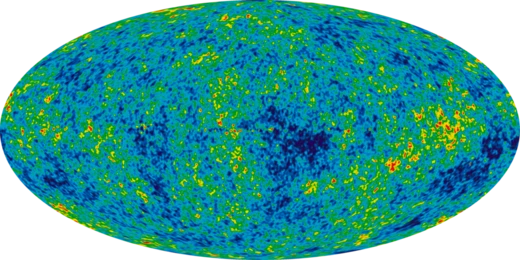
The CMB is the faint thermal radiation released about 380,000 years after the Big Bang, when the universe cooled enough for free electrons to bind into atoms and light to stream unimpeded. It permeates all of space and its tiny temperature ripples encode the seeds from which every galaxy eventually grew.
What does current cosmology predict for the ultimate fate of the universe?
Given the observed acceleration attributed to dark energy, the leading scenario is a slow heat death in which stars exhaust their fuel, black holes evaporate, and expansion continues without bound. Speculative alternatives such as a Big Rip or a recollapsing Big Crunch remain mathematically possible but lack strong observational backing.
What is cosmic inflation?
Cosmic inflation is a hypothesized fraction-of-a-second burst of exponential expansion in the earliest moments of the universe, proposed by Alan Guth in 1980. It explains the remarkable large-scale uniformity and near-flat geometry of the cosmos while also seeding the quantum fluctuations that later grew into galaxies.
How large is the observable universe?
The observable universe stretches roughly 93 billion light-years across, a span larger than 13.8 billion light-years because space itself has been expanding while photons have been en route. Beyond that horizon, additional regions of the cosmos may exist that no signal could ever reach us from.
What are some landmark observational milestones in modern cosmology?
The 1965 accidental detection of the CMB by Penzias and Wilson confirmed the hot-Big-Bang picture, and the 1998 discovery of accelerated expansion by two independent supernova teams earned the 2011 Nobel Prize. More recently, Planck satellite CMB maps and LIGO's 2015 detection of gravitational waves from merging black holes have sharpened our quantitative picture of cosmic history.